
MA-号码: 20003754800220

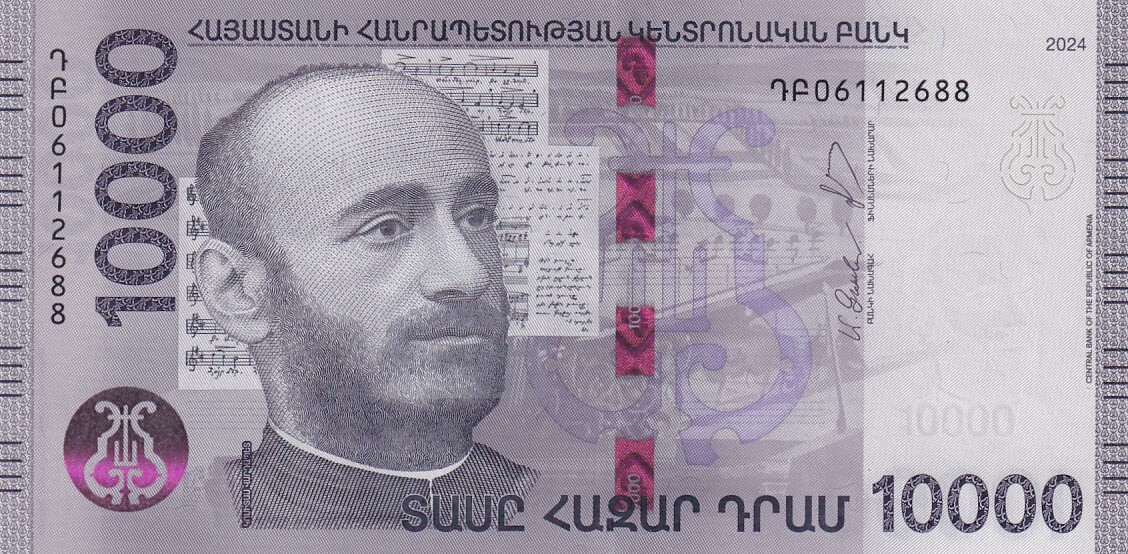
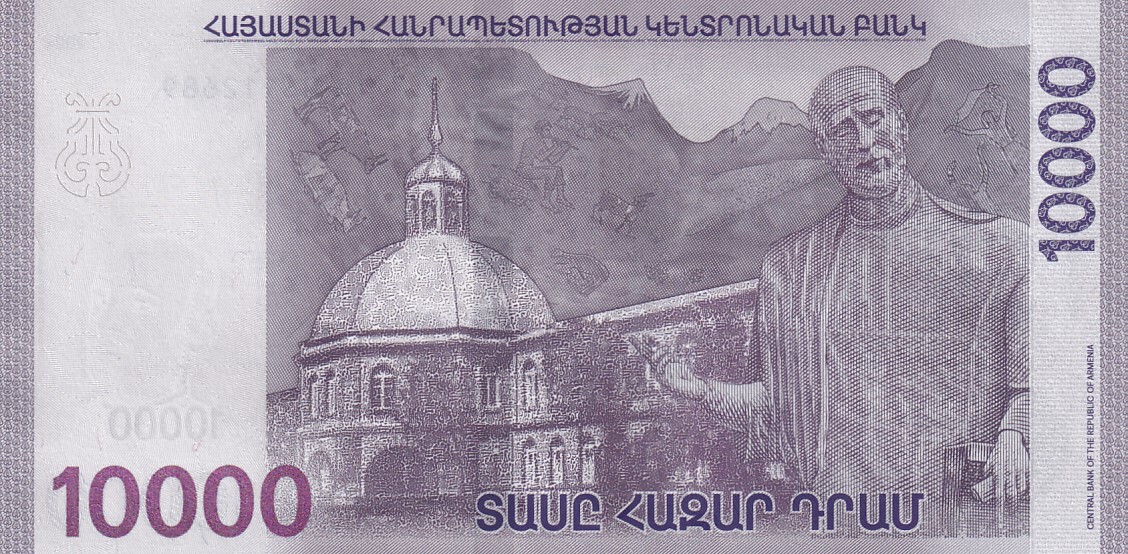
Armenia 10000 dram 1000 Dram Komitas Vardapet - 2024 UNC
Numiscollection 
15
On MA-Shops since 15 years
15285 评分,
99,8 % 正面Positive (过去24个月)
Worldwide shipping
389.55 元52,00 EUR
Import tax may be added
+ 149.83 元 运费 ( to China )
寄运时间: 7 到 10 天
+ 149.83 元 运费 ( to China )
| +49 (0)2871 2180 383 |
| 支付方式 |
| 电汇 |
Komitas Vardapet (1869–1935) was a priest, musicologist, composer, singer, and collector of Armenian folk music. He is considered one of the founding figures of modern Armenian music and a central icon of Armenian culture.
Key facts about Komitas:
- Birth name: Soghomon Soghomonyan
- Religious name: Komitas; "Vardapet" is an ecclesiastical title meaning "Doctor of the Church"
- Origin: Born in Kütahya (in the Ottoman Empire, present-day Turkey), he was orphaned at a young age and taken in by the Armenian Church.
- Education: He studied at the Gevorgian Seminary in Etchmiadzin (the religious center of the Armenian Church), and later in Europe, notably in Berlin, where he received training in Western music.
- Musical work:
- He collected, transcribed, and harmonized thousands of Armenian folk songs, as well as Kurdish, Turkish, Persian, and Georgian songs.
- He composed choral, religious, and instrumental music.
- His style blends Armenian tradition with Western classical forms.
- Cultural significance: He was a pioneer in ethnomusicology. Thanks to him, a large part of the Armenian musical heritage has been preserved.
- Armenian Genocide: In 1915, he was arrested along with other Armenian intellectuals during the first wave of the genocide. Although he was eventually released and survived, he was deeply traumatized, leading to a mental breakdown. He spent the last years of his life in a psychiatric hospital in Paris, where he died in 1935.
Legacy:
Komitas is a revered figure in Armenian culture. His name is often associated with the resilience of Armenian identity through music. Statues, schools, streets, and even a cathedral are named after him (notably the Komitas Cathedral in Yerevan).

Information
Online orders are welcome as always and will be shipped directly.
|
Withdraw from contract here 商店主页 | 0购物车 | 使用条件 | 联系 | MA 使用条件 | 隐私声明 | 保证期 | MA-Shops 新商品 Copyright ® 2001-2026, MA-SHOPS Coins All Rights Reserved. Designated trademarks and brands are the property of their respective owners. |