
MA-号码: 210902454

VATICAN 1450 (struck ca. 1664) Opening & Closing of the Holy Door / Restitution Medal by Girolamo Paladino. NGC AU 58


5,206.45 元695,00 EUR
优惠 1,161.15 元 / 18%
Import tax may be added
+ 224.74 元 运费 ( to China )
寄运时间: 8 到 11 天
+ 224.74 元 运费 ( to China )
| +49 (0)2871 2180 383 |
| 支付方式 |
| 电汇 |
 Certification details
Mint Place: Rome
Reference: CNORP I, 37. var.
Condition: Certified and graded by NGC as AU-58!
Medallist: Girolamo Paladino (active ca. 1647–1692)
Mint Year: dated 1450, (struck during or after 1664, the year in which Cardinal Francesco Barberini comissioned the series).
Denomination: Medal - Opening & Closing of the Holy Door during the Holy Year (the first such ceremony took place during 1500).
Material: Silver
Weight: 40.14gm
Diameter: 44mm
Obverse: Bust of Pope NIcholas V Bust left, wearing mantum and Papal tiara.
Legend: . NICOLAVS . V . - . PONT . MAX
Reverse: Pope kneeling left closing Porta Santa (Holy Door), surrounded by attendants.
Legend: . RESERAVIT . ET . CLAVSIT . ANN . IVB .
Exergue: . M . D .
Girolamo Paladino (active ca. 1647–1692) was a 17th-century Italian medalist and stampcutter based in Rome. He is primarily known for producing medals for the Papal States.
Papal medals have their origins in the production begun in the 15th century by Paul II. At the end of the 16th century medals called “restitution” began to be struck. They are pieces that are intended to depict “in metal” those papacies that did not strike medals at the time, as it was an art form then still quite unknown. The artists who made these medals took as models the portraits of the popes that they could see in the basilicas of Saint Peter and Saint Paul, trying to give the image enough charisma to promote devotion and popular worship. In this way, the restitution medals became an instrument of publicity for the Church.
Pope Nicholas V (Latin: Nicolaus V; Italian: Niccolò V; 15 November 1397 – 24 March 1455),born Tommaso Parentucelli, was head of the Catholic Church and ruler of the Papal States from 6 March 1447 until his death in March 1455. Pope Eugene IV made him a cardinal in 1446 after successful trips to Italy and Germany, and when Eugene died the next year, Parentucelli was elected in his place. He took his name Nicholas in memory of his obligations to Niccolò Albergati. He remains the most recent pope to take the pontifical name "Nicholas".
The pontificate of Nicholas saw the fall of Constantinople to the Ottoman Turks and the end of the Hundred Years' War. He responded by calling a crusade against the Ottomans, which never materialized. By the Concordat of Vienna he secured the recognition of papal rights over bishoprics and benefices. He also brought about the submission of the last of the antipopes, Felix V, and the dissolution of the Synod of Basel. A key figure in the Roman Renaissance, Nicholas sought to make Rome the home of literature and art. He strengthened fortifications, restored aqueducts, and rebuilt many churches. He ordered design plans for what would eventually be the Basilica of St. Peter.
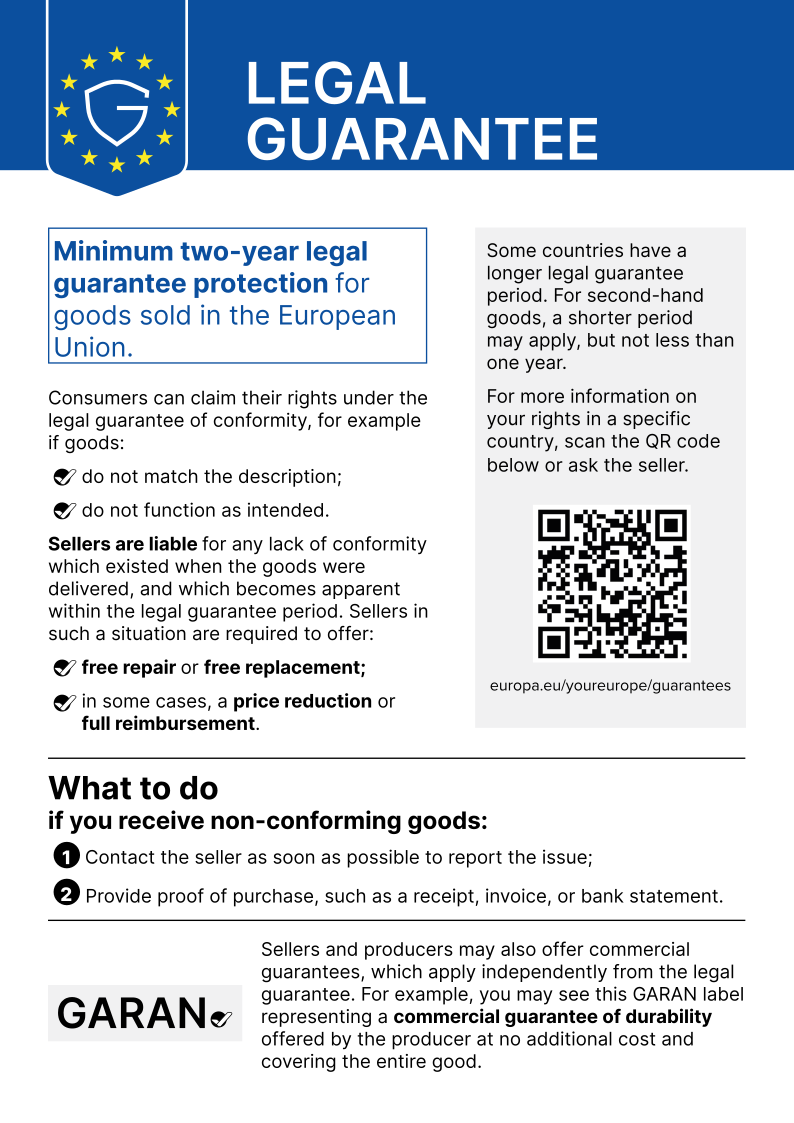

Information
Online orders are welcome as always and will be shipped directly.
|
Withdraw from contract here 商店主页 | 0购物车 | 使用条件 | 联系 | MA 使用条件 | 隐私声明 | 保证期 | MA-Shops 新商品 Copyright ® 2001-2026, MA-SHOPS Coins All Rights Reserved. Designated trademarks and brands are the property of their respective owners. |